Your team has been heads-down for months. Deadlines, Slack threads, back-to-back Zoom calls. Someone finally says, "We should do an offsite." Everyone agrees. And then the hard part begins — actually planning it.
If you're an HR lead, admin manager or team leader tasked with organising a corporate offsite in Bhubaneswar, this guide will walk you through every decision — from why Bhubaneswar is a surprisingly great choice, to the day-of logistics that make or break the experience.
1. Why Bhubaneswar for a Corporate Offsite?
Most companies default to Goa, Jaipur or the hills around Bangalore. But Bhubaneswar has quietly become one of the best offsite destinations in India, especially for teams from the east and south. Here's why:
✈️ Easy to reach: Biju Patnaik International Airport has direct flights from Delhi, Mumbai, Bangalore, Hyderabad, Kolkata and Chennai. Most of your team can get here in 2–3 hours.
💰 Great value: 4-star hotel rooms, conference halls and catering in Bhubaneswar cost 40–60% less than equivalent setups in Goa, Mumbai or Bangalore. Your budget goes further without compromising quality.
🏛️ Culture + history: This is the Temple City of India. Between sessions, your team can visit Lingaraj Temple, Udayagiri Caves, Dhauli Peace Pagoda or the Tribal Museum. It's the kind of place that sparks conversations beyond work.
🍽️ Incredible food: Odia cuisine is one of India's best-kept secrets — dalma, pakhala, chhena poda. Plus, great multi-cuisine restaurants for teams with diverse food preferences.
🏖️ Puri is 60 km away: If your offsite is 2–3 days, a half-day trip to Puri beach or Konark Sun Temple turns a work trip into a memorable experience. It's the kind of thing people talk about long after.
The combination of affordability, connectivity, cultural richness and fewer distractions (nobody's sneaking off to a beach club) makes Bhubaneswar a genuinely productive offsite destination.
2. Define the Purpose Before You Pick a Venue
The biggest mistake in offsite planning is booking a resort first and then figuring out what you're going to do there. Start with the "why." A corporate offsite typically falls into one of these categories:
🎯 Strategy & planning: Annual planning, OKR setting, roadmap reviews. Needs a conference hall with AV, whiteboards and breakout rooms. Minimal distractions.
🤝 Team bonding: A new team forming, a team that's been remote-first and never met in person, or a team going through change. Needs a mix of structured activities and informal hang-out time.
🎓 Training & upskilling: Workshops, certifications, product training. Needs classroom-style or theatre-style seating, good AV and reliable Wi-Fi.
🏆 Celebration & reward: Year-end party, Founders' Day, milestone celebration. Needs a great venue, good food, a stage and a party vibe.
Your purpose determines the venue type, the schedule density, the budget split and even the dress code. A strategy offsite at a poolside resort sends mixed signals. A team-bonding trip in a stuffy boardroom defeats the purpose. Get this right first.
3. The Ideal Offsite Schedule (and How Not to Over-programme It)
The most common complaint after corporate offsites? "It was just like the office, but in a different building." Don't pack every hour with presentations. Here's a structure that works well for a 2-day offsite:
Day 1 — Arrive, Align, Connect
🕐 Morning: Arrivals and check-in. Let people settle, grab coffee, decompress from travel.
🕐 Late morning: Opening session — the "why we're here" talk. Keep it to 30 minutes. Set context, share the agenda, get energy up.
🕐 Afternoon: The meaty session — strategy discussion, workshop, training. 2–3 hours max with a break in the middle.
🕐 Late afternoon: Free time. Gym, nap, explore the city. This is where real bonding happens — in unstructured moments.
🕐 Evening: Team dinner. Keep it relaxed — no presentations, no award ceremonies on night one. Good food, good conversation.
Day 2 — Solve, Decide, Celebrate
🕐 Morning: Breakout sessions — smaller groups working on specific problems or initiatives. This is where the real work happens.
🕐 Late morning: Regroup — each breakout shares their output. Decisions get made.
🕐 Lunch: Team lunch with the closing session — recap commitments, celebrate wins, share what's next.
🕐 Afternoon: Optional activity — a trip to Dhauli Peace Pagoda, a food walk through old Bhubaneswar, or a quick visit to Puri if time allows.
💡 Rule of thumb: No more than 4–5 hours of structured sessions per day. The best ideas at offsites happen during meals, walks and chai breaks — not during slide decks.
4. Choosing the Right Venue — What Actually Matters
Forget the fancy brochure photos. Here's what separates a good offsite venue from a frustrating one:
🔌 Reliable AV and Wi-Fi: This is non-negotiable. Test the projector, screen, mic and internet speed during your site visit. Many halls look great but have terrible Wi-Fi. If your team is presenting or running hybrid sessions, this alone can ruin the day.
🚪 Breakout space: You need at least one additional room beyond the main hall for small group discussions. A lobby or restaurant won't cut it — you need a door that closes.
🏨 Rooms on-site: Having accommodation at the same property as the conference hall eliminates transport logistics, saves time and keeps the team together. This is especially important for multi-day offsites.
🍽️ In-house catering: Ordering food from outside for 30–50 people is a logistical nightmare. In-house kitchen = consistent quality, flexible timing and one less vendor to manage.
📍 Location and access: How far is the venue from the airport? Can you get there in under 30 minutes? Is there parking for local team members who drive? These small things add up.
👤 Dedicated coordinator: A venue that assigns you a single point of contact for the event — someone who handles the hall, food, AV and room block — is worth its weight in gold compared to one where you're chasing three different departments.
💡 Pro tip: Always do a physical site visit before booking. Photos can be misleading. Check the hall during a live event if possible — you'll learn more in 10 minutes than from any brochure.
5. Budget Planning — Where the Money Actually Goes
Corporate offsites in Bhubaneswar are significantly cheaper than in metro cities, but costs add up fast if you're not tracking them. Here's a realistic breakdown for a 2-day offsite with 40–50 people:
The biggest savings hack? Book a venue that bundles hall, rooms and catering. When these are separate vendors, you pay more and spend twice the time coordinating. A hotel with in-house conference facilities almost always offers better package rates than a standalone conference hall plus a separate hotel.
For flights, book 3–4 weeks in advance. Bhubaneswar flights from major cities are often ₹3,000–5,000 one-way, which is half the cost of Goa or Jaipur during peak season.
6. Food — Don't Underestimate This
Nothing kills offsite energy faster than bad food or long waits. And nothing earns you more goodwill from your team than surprisingly good food. A few things to get right:
Breakfast buffet: Keep it available for at least 2 hours. People wake up at different times, and forcing everyone to eat at 7:30 AM sharp on a "fun offsite" is counterproductive.
Tea/coffee breaks: Schedule these between sessions. Provide real chai, not just vending machine coffee. Add biscuits, samosas or fruit. This is where side conversations happen.
Lunch: Buffet format works best — people can eat at their own pace and it avoids long table-service waits. Include both veg and non-veg options, and always check for dietary restrictions in advance.
Dinner: This is your chance to impress. A sit-down multi-cuisine dinner, or even a themed Odia food night, creates a shared memory. If the venue has a bar or can arrange drinks, even better.
The Odia touch: If your team is visiting from other cities, introduce them to local food — dalma, chhena poda, Puri-style seafood. It's a conversation starter and makes the trip feel like more than just another conference in another hotel.
Ask your venue for a custom menu rather than accepting the standard package. Most in-house kitchens are happy to adjust if you give them a week's notice.
7. Activities That Actually Work (and Ones That Don't)
Let's be honest: most "team building activities" at corporate offsites are awkward. Forced trust falls, cringe icebreakers and treasure hunts designed for schoolchildren don't build real camaraderie. Here's what actually works:
✅ Works: A group trip to Dhauli Peace Pagoda or Udayagiri Caves — walking, talking, exploring together without an agenda. Bonding happens naturally when people share an experience.
✅ Works: A team cook-off where small groups compete to make an Odia dish. It's collaborative, fun and ends with food.
✅ Works: Evening games — cricket on the lawn, carrom tournaments, a quiz night. Low pressure, high laughter.
✅ Works: A half-day trip to Puri or Konark. The drive itself is beautiful, and a change of scenery after a day of meetings is rejuvenating.
❌ Doesn't work: Mandatory fun. If people want to skip an activity and read a book by the pool, let them. Adults bond better when they have choices.
❌ Doesn't work: Packed schedules with zero downtime. If every hour is accounted for from 7 AM to 10 PM, people will be exhausted and resentful by day two.
The best offsites leave room for spontaneity. Structure the mornings, free up the afternoons.
8. Travel Logistics — The Admin Checklist
This is the unglamorous part that makes everything else possible. Here's the checklist:
✅ Book flights early — Bhubaneswar has direct flights from all major cities, but fares spike closer to the date.
✅ Arrange airport transfers. Biju Patnaik Airport is just 4–5 km from the city centre. A hotel shuttle or pre-booked cabs eliminate the Ola/Uber scramble.
✅ Share a detailed itinerary with the team at least 1 week before — travel times, check-in details, session schedule, what to wear, what to bring.
✅ Collect dietary restrictions and allergies in advance. Share with the caterer.
✅ Create a WhatsApp group for real-time updates during the trip.
✅ Have one person on-site as the "logistics lead" who handles room issues, AV glitches and food timing so that the team leader can focus on content.
✅ If your team includes people from Bhubaneswar, arrange parking at the venue — don't assume it's available.
✅ Plan the last session to end at least 3 hours before the latest return flight. Nobody wants to rush from a closing session to the airport.
9. The One Thing Most Offsites Get Wrong
No follow-up. Teams have energising discussions, make bold commitments on whiteboards, take group photos — and then go back to the office on Monday and forget everything. The offsite becomes a nice memory instead of a turning point.
Fix this by assigning one person to document key decisions and action items during the offsite (not after). Send a summary email within 48 hours with owners and deadlines for each commitment. Schedule a 30-minute check-in two weeks later to review progress.
The offsite's real impact isn't measured by the fun people had — it's measured by what changed after everyone got back.
Hotel Pushpak — Bhubaneswar's Corporate Offsite Venue
We've hosted corporate offsites and conferences for companies of all sizes — from 15-person leadership retreats to 400-person annual meets. Here's what makes Hotel Pushpak a natural fit for offsites:
📍 Central location: Hotel Pushpak at Kalpana Square is 4 km from the airport and 0.5 km from the railway station — your team can be checked in within 20 minutes of landing.
🏨 Rooms + halls in one property: 35 rooms at Kalpana Square, plus premium rooms at our Dhauli Square convention property. No shuttling between hotel and venue.
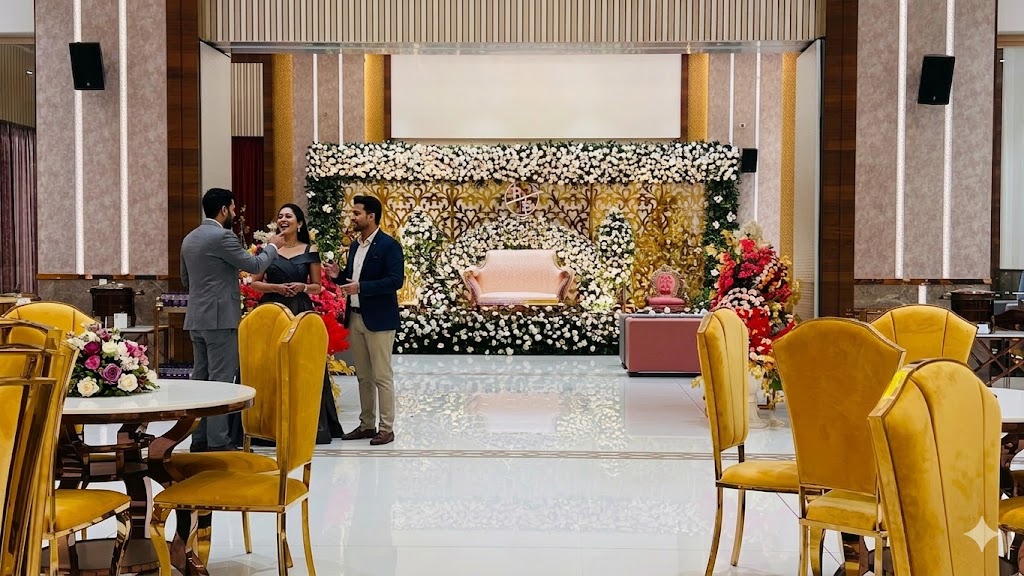
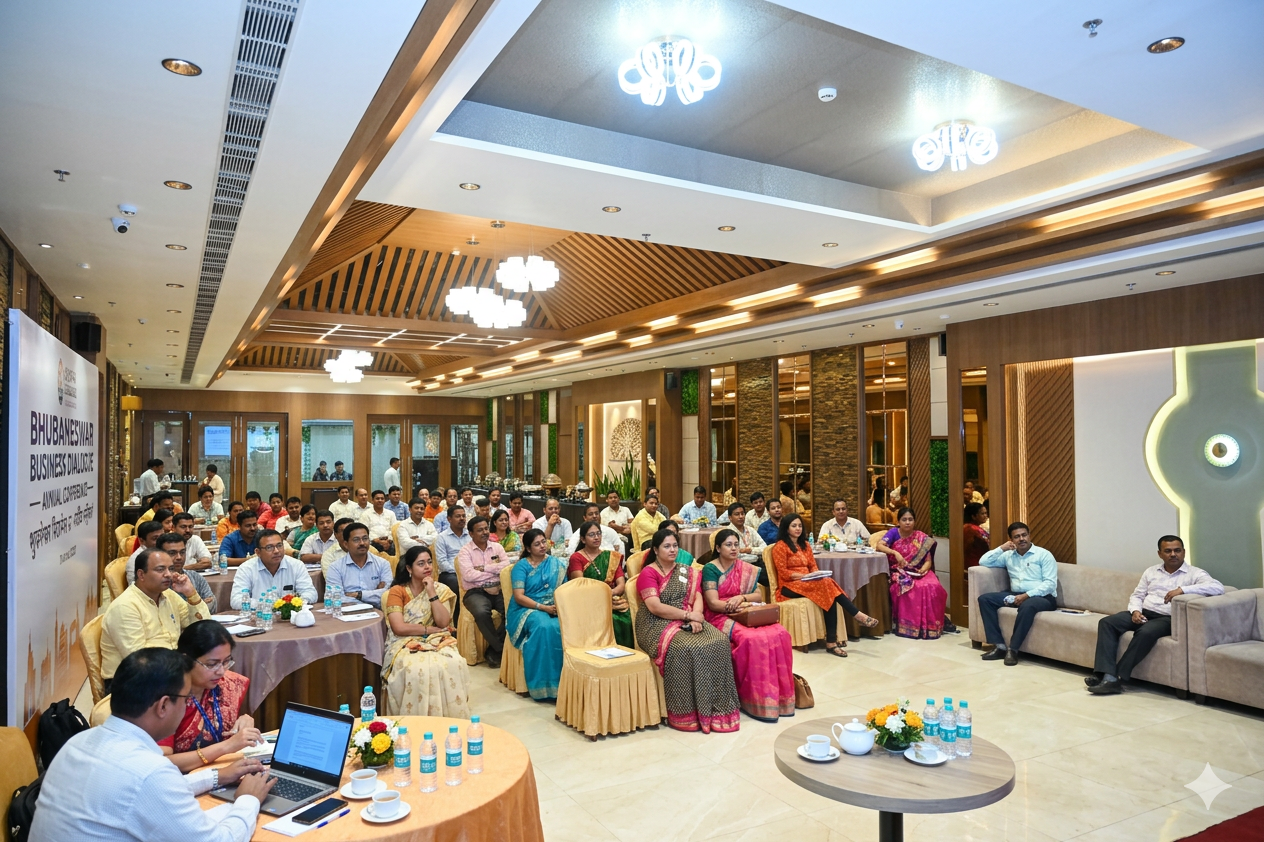
🎤 Multiple hall options: Lotus Hall (50–400), Lilly Hall (50–300), Orchid Hall (30–50), and soundproof boardrooms (5–20) at Kalpana Square — conference setup, breakout rooms and boardroom sessions all under one roof. For larger events, our Dhauli convention offers halls up to 700+ capacity.
🍽️ In-house kitchen: Multi-cuisine catering from Golden Bird Restaurant. Custom menus, live counters, tea breaks — all managed internally. No outside vendors to coordinate.
🔧 One coordinator: Your dedicated event manager handles the hall, food, AV, rooms and parking. One call solves everything.
🍺 Evening options: The Rock Sports Bar on-site for team dinners and drinks. No cabs needed.
Whether it's a 2-day strategy offsite for 30 people or a 3-day annual conference for 300, we've done it hundreds of times. And with 60+ years in Bhubaneswar's hospitality scene, we know the city well enough to help you plan the cultural experiences, restaurant recommendations and travel logistics that turn a routine work trip into something your team actually looks forward to.
Planning a Corporate Offsite?
Tell us your dates, team size and what you're looking for — we'll put together a custom package.